
Bird poop is not just unseemly. Due to it being partially made of a strong acid and its tendency to release airborne particles when dried, excess amounts can damage both property and the human body. If you are plagued by the feces of wild birds in a public or private setting, control of wild bird populations is important to protect yourself and what you own.
What Is It Made Of?
The collective term “bird poop” tends to be used to refer to both feces and renal waste, as it is expelled from the body at the same time from the vent of the cloaca. The brown or black portion of a bird dropping is the fecal matter. The color of the feces can indicate a number of things, including diet and whether the bird is eating enough. A bird might even expel a bigger dropping after sleeping or laying an egg!
Kidneys filter the blood of nitrogenous waste (the leftovers of proteins and genetic material); however, the end product in birds is not urea, nor is it kept in a bladder in the form of urine as it would be in a human. Instead, a different process is used, and the end product is uric acid in the form of a liquid portion and a dry paste. Uric acid takes more energy to make than urea, but the process does have its benefits. Uric acid is less harmful to the body than urea. Additionally, the uric acid cycle allows the bird to retain more water.
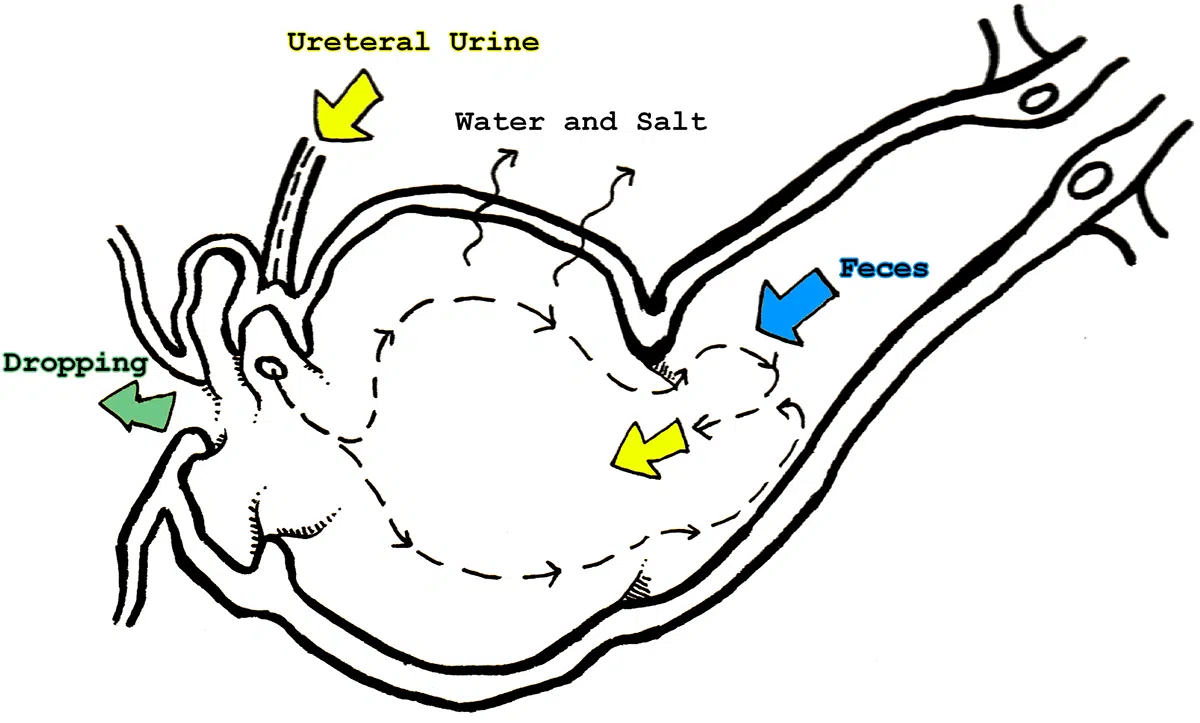
Illustration by Logan Bourgeois, Hawkeye Employee. Urine from the kidneys gets filtered for a second time in the cloaca’s coprodeum, where it meets the feces and is expelled through the vent at the same time.
How Are People Affected?
Uric Acid - Powerfully Corrosive
As the name implies, this large component of bird droppings is notably acidic. Most sources will dictate a pH range between 3 and 4.5 for most bird droppings. This means the nitrogenous waste can be as acidic as vinegar, acid rain, and tomato juice.
This acid and the salts it can precipitate act to corrode metals like copper and bronze. The presence of a bird dropping can cause pitting and small holes, or cracks in the upper layers of metal sheeting. Because metal corrosion results in the production of another salt, the process worsens by itself when left alone. An article by Forr et al. in Volume 74, Issue 3 of the journal Materials and Corrosion also describes that the electrochemical behaviors of some metals, like duplex stainless steel, are affected locally by bird droppings.
The range of pH of a dropping can be affected by the diet of the bird. For example, more protein-rich foods in a bird’s diet introduce more nitrogen into the bloodstream, meaning more product released by the kidneys in the form of uric acid. This is also true of glutamate-rich foods like processed meat, cheese, and MSG. For wild birds, the best source of these foods may just be the dumpster behind a restaurant.
Feces - A Source of Sickness
Throughout history, several illnesses have been identified as consequences of bird feces exposure. Because they are passed from animal to human, these diseases are classified as zoonotic. These diseases can be caused by bacteria, viruses, and parasites alike.
When considering the bacteria humans may pick up from avian feces, the names are shockingly similar to those discussed outside of the animal discipline. Genus names like Salmonella, Chlamydia, Listeria, and Staphylococcus can be heard during doctor’s visits for bird owners and non-owners alike - heck, you can pick up a staph infection from your average gym equipment! Symptoms range from the typical flu-like respiratory issues of parrot fever to the digestive distress of salmonella and many other diseases.
Avian viruses have made headlines recently with the uptick in global avian influenza cases across the animal kingdom. Though transmission to humans remains low and infection routes are highly circumstantial, the effects of the disease are still, for lack of a better description, nothing to sneeze at. Another notable viral condition that can be contracted from feces is Newcastle disease, which in humans mainly affects the eyes.
One strain of avian giardia is transmissible to humans, as are cryptosporidiosis and toxoplasmosis. Toxoplasmosis from birds is different from that of cats and causes detrimental reproductive harm. Fungal infections from avian feces can spread to surrounding groundwater and soil to cause indirect transmission.
Is It All Bad?
The short answer: no, of course not.
Those Involved with Birds
For people who keep birds, feces is an important indicator of the health of their feathered friends. Even the members of Hawkeye rely on the quality of their helpers’ poop to make sure they’re in tip-top shape! Plus, antibiotic and antiviral treatments are constantly being developed and used by hobbyists and poultry farmers to prevent contamination from wild individuals when possible.
Bird droppings are also important for the ecosystem and research. The nitrogen-rich droppings of some bird species are used as fertilizers in many parts of the world. Assessing DNA extracted from bird poop helps to track the presence of threatened insects that may be difficult to capture while alive, according to a 2023 article by Bookwalter et al. in the Journal of Insect Conservation. Microplastic detection in bird feces gives insight into the broad impact of humans on the environment.
The Public
It is difficult to conceptualize the amount of poop birds can produce. The smaller the bird, the higher the metabolism, and the more poop it produces. Gulls may even poop twice per hour.
You may not be a bird owner, researcher, or farmer, yet the droppings left by wild birds could be negatively affecting your business, property, or lifestyle. If you want to get rid of those pesky poopers, call Hawkeye Bird & Animal Control today and browse our other articles to learn more about bird abatement in different situations.
Contributing writer and researcher: Logan Bourgeois