
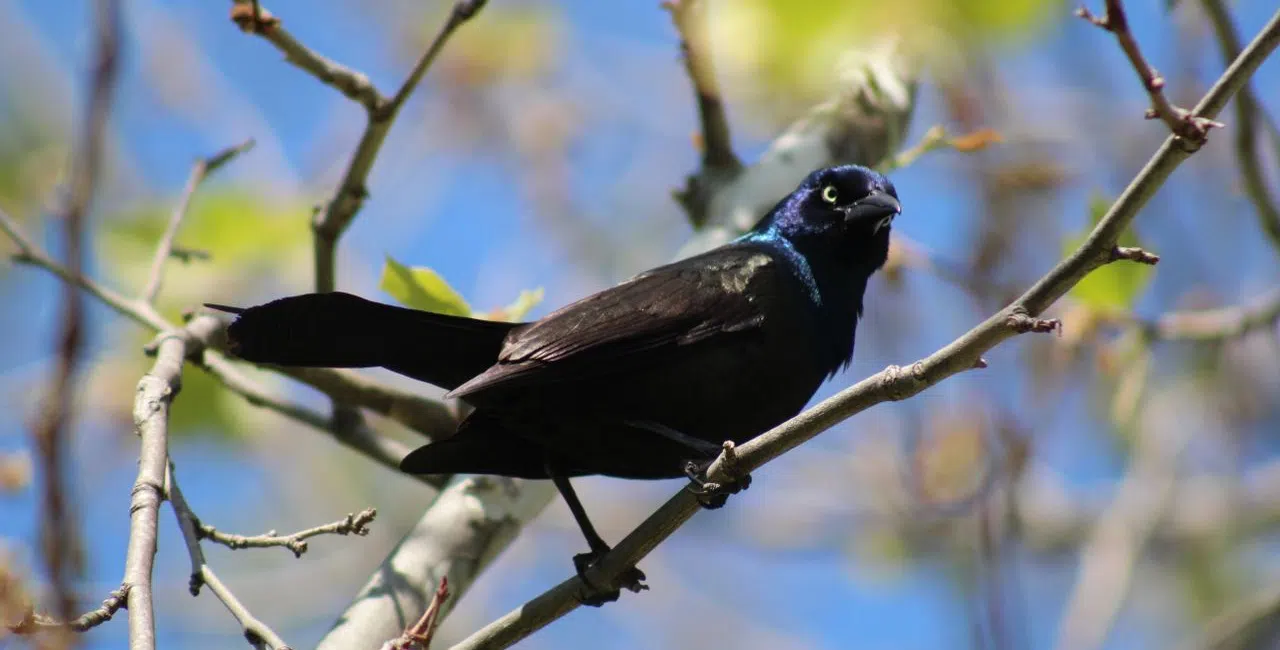
Grackles are a common, year-round sight on virtually every Florida property. During late summer, many Florida property owners may notice grackles with patchy feathers, thinning tails, and an untidy appearance. While this may raise concerns about sick or injured birds, it is actually a completely normal annual process called a molt. It’s undergone by both Florida native grackles species: common grackles (Quiscalus quiscula) and boat-tailed grackles (Quiscalus major).
Grackles undergo this dramatic change in appearance shortly before larger flocks begin to gather for the fall, and understanding the process of the molt may help property owners explain the changes in behavior they observe in their local birds as summer draws to a close.
What Is Molting in Grackles?
Molting is a process by which birds replace their feathers throughout the year. Some molts—referred to as partial molts—may only replace a few feathers, typically on the body, while full molts replace every feather. Molts are typically undergone annually, but the speed at which a bird molts is highly dependent on species. Some other Florida natives, such as northern cardinals (Cardinalis cardinalis) and blue jays (Cyanocitta cristata) may lose many feathers at once in what is called a “catastrophic molt,” leaving them almost entirely bald on their heads in late summer and early fall.
While this process may seem a little overzealous, molting helps birds replace worn feathers. Broken and worn feathers that cannot properly contour to the body produce drag and slow birds in flight. Additionally, feathers that may be important for courtship displays, such as the large tail feathers of male grackles, may be prone to breakage and impact a bird’s displays. While molting is an important part of a bird’s annual life cycle, it is vital that birds are able to stay healthy during the process. Feather regrowth requires a lot of additional energy and resources, so a population molting without issues can be a sign of healthy birds.
When Do Grackles Molt in Florida?
Both common and boat-tailed grackles share similar molting schedules in Florida. These birds typically undergo full-body molts in late summer and early fall, but timing may vary slightly depending on bird health and local climate conditions. Juveniles first molt into their adult feathers in late summer, but even adult birds undergo full molts after breeding season in late summer every subsequent year. However, hotter, more humid summers may also push these molts to occur earlier in the season.
How Molting Changes Grackle Behavior
Molting brings on many changes to birds’ physical appearances, but the energy and resource demands of feather regrowth may lead to noticeably different behavior in local grackle populations as well.
As molting occurs after breeding and nesting seasons, the priorities of grackles shift from maintaining large social groups and rearing the year’s hatchlings to enduring the molt. Molting birds require more food than usual, so they may be seen foraging and scouting for food more often. When not foraging, molting grackles are frequently at rest in shaded or covered areas. Areas that have also had previous issues with grackles stealing food may notice an uptick in bolder, more persistent feeding strategies when birds are not at rest. Birds may repeatedly return to an area where they have successfully stolen food or remain there despite numerous attempts to scare them away.
Understanding how molting looks and alters the behavior of grackles not only helps property owners distinguish healthy birds from those that may need veterinary help but may also explain other “sudden” changes in behavior in local flocks.
How to Tell Whether a Grackle Is Molting or Injured
During bird molting season, grackles losing feathers may appear patchy or uneven, but these changes are usually a normal part of the process. Here’s how you can tell the difference between a healthy and unhealthy or injured grackle during the molting period.
Signs of a Healthy Molt
- Patchy feathers. Grackles are typically uniform in color, but molting birds may have more of a mottled appearance.
- Short or missing tail feathers. Adult male grackles, particularly boat-tailed grackles, have large, fan-shaped tails when not molting. Males may have tails that are completely bare except for a few feathers when molting.
- Uneven wing feathers. Wing feathers are dropped one-by-one during molting, so molting birds may have noticeable gaps in their wing feathers that can be mistaken for injury.
- Symmetrical feather loss. When a wing feather is dropped during the molt, the same feather on the opposite wing tends to drop soon after. Symmetrical missing wing feathers are a great indicator of a bird going through a molt.
Signs That May Indicate Illness or Injury
- Visible injury. A noticeable limp, swollen or closed foot, drooping wings, or large patches of missing body feathers are cause for concern.
- Inability to fly. Mature, grounded birds that are unable to fly away or do not attempt to flee from approaching humans are in distress.
- Abnormal posture. Injured or severely ill birds may hunch over or huddle on the ground. Stuns from window strikes or other neurological conditions can also cause birds to “stargaze”—keep their heads twisted to look up at the sky—or loll their heads.
- Birds that do not rouse when approached or seem to only be able to fly for very short periods of time may need assistance from a vet or wildlife rescue. Overexerted birds may gape their mouths or bob their tails to pant.
What to do if You Find an Injured or Ill Bird
- Contain the bird. Never attempt to handle wild birds without gloves. Place the bird in a box or container with air holes and put the box in a quiet, dark area. . Thoroughly wash anything used to capture the bird before reuse; if you used disposable or rubber gloves, throw them out.
- Do not attempt to feed or water the bird. Birds are highly susceptible to pneumonia from aspirating fluids and should only be fed or watered by a professional.
- Contact a wildlife rehabilitator. Provide as much detail about the bird and its condition when found as you can. Most states have lists of permitted wildlife rehabilitators listed by county available online. The Florida Fish and Wildlife Conservation Commission’s list of permitted wildlife rehabilitators and their contact information can be found here.
Should Property Owners Be Concerned About Molting Grackles?
Molting is a completely normal seasonal change for grackles. However, finding molting birds on one’s property may be an early sign of a forming grackle problem. Owners of certain properties, such as resorts, restaurants, pools, and other outdoor dining venues, may begin to experience grackles attempting to steal food, raid the trash, or roost around dining areas. These locations should be especially wary if they begin to notice birds starting to gather and cause problems for guests. If bird problems begin or existing problems worsen throughout the molt, it is likely time for property owners to monitor the issue or contact professional bird control.
Dos and Don’ts for Grackle Molting Season
Do:
- Continue or begin routine property inspections for bird roosts or nests.
- Monitor flock sizes throughout the day.
- Keep food waste and exposed food under control.
- Watch for evening roost activity.
- Report injured wildlife when appropriate.
Don’t:
- Assume every patchy bird is ill or injured.
- Feed flocking grackles.
- Ignore increasing bird activity or worsening guest complaints.
- Disturb active nests if present.
- Delay action if bird problems continue growing.
How Molting Season Can Support Early Grackle Control Planning
Molting season may only be a preview of worsening bird problems later in the year. As grackles gather during late summer and early fall, their numbers begin to build on properties that they have deemed safe for roosting and feeding. As such, the molting season is an excellent time to begin transitioning towards more serious bird control for properties experiencing an increasing number of grackle issues or guest complaints. It is imperative that property owners who suspect an issue with gathering birds prepare for bird control measures by monitoring bird activity and noting where grackles congregate.
Professional Grackle Control Before Large Roosts Form
Seeking a partnership with bird control experts before big flocks or roosts settle in is paramount. However, when prevention is no longer enough, professional grackle removal and dispersal may also be necessary to address established bird activity.
Falconry
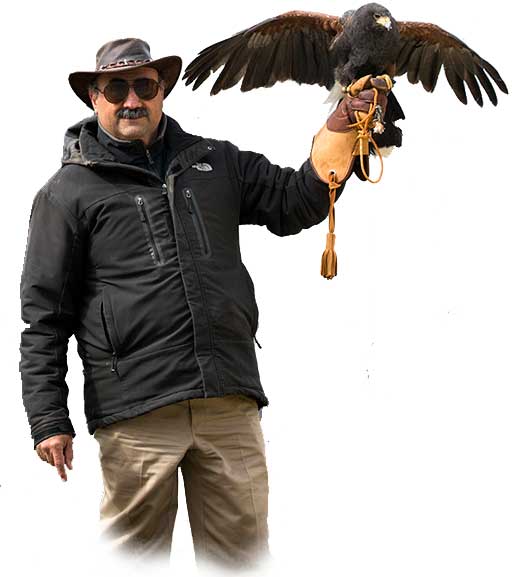
Falconry is incredibly useful for dispersing forming colonies. The consistent presence of a bird of prey tells incoming grackles that an area is not safe for roosting or nesting, utilizing their natural fear of predation to keep them away from sites for the season.
Falconry does require a licensed professional to conduct, but it is a highly effective, natural method for deterring birds that may be beginning to establish themselves in an area. In areas that notice gatherings of molting birds, falconry may be especially useful in preventing future bird pressure later in the year.
Laser Bird Control
Lasers can be a great way to disperse grackle flocks that are settling in shaded areas to roost. While less effective in direct sunlight, automated laser systems and handheld lasers are effective at scaring birds up from areas where they may be settling down to form a colony in the evening. Repeated applications of the laser in areas birds have deemed safe to form colonies may force them to move on to easier targets.
Bird Netting
Bird netting is a fantastic method for entirely excluding grackles from certain areas. Enclosed spaces, shaded areas, restaurant patios, and maintenance corridors that see use by birds are all places where bird nets may be utilized to prevent access. Areas that show signs of forming roosts or nests can also be temporarily netted off until grackles move on for the season.
Pyrotechnics
Pyrotechnics may only be practical in a few circumstances, but they have a dramatic effect on gathered flocks of grackles. As this involves the use of firecrackers and other devices that produce loud sounds, pyrotechnics should only be used in open, non-residential areas. They may also require prior authorization from local law enforcement to ensure they aren’t disturbing or putting the community in danger.
Hire Hawkeye for Florida Grackle Control
Hawkeye Bird and Animal Control has over 30 years of experience with grackle control and prevention. We specialize in falconry, lasers, pyrotechnics, and other prevention methods that we utilize to suit each client’s individual needs. Hawkeye is also strongly committed to compliance with local, state, and federal law. Our field technicians meet all permitting and certification requirements necessary to conduct professional bird control and prevention in the State of Florida. Call Hawkeye today for your grackle prevention - expert-led and tailor-made for you.
Contributing writer and researcher: Riley Sullivan