
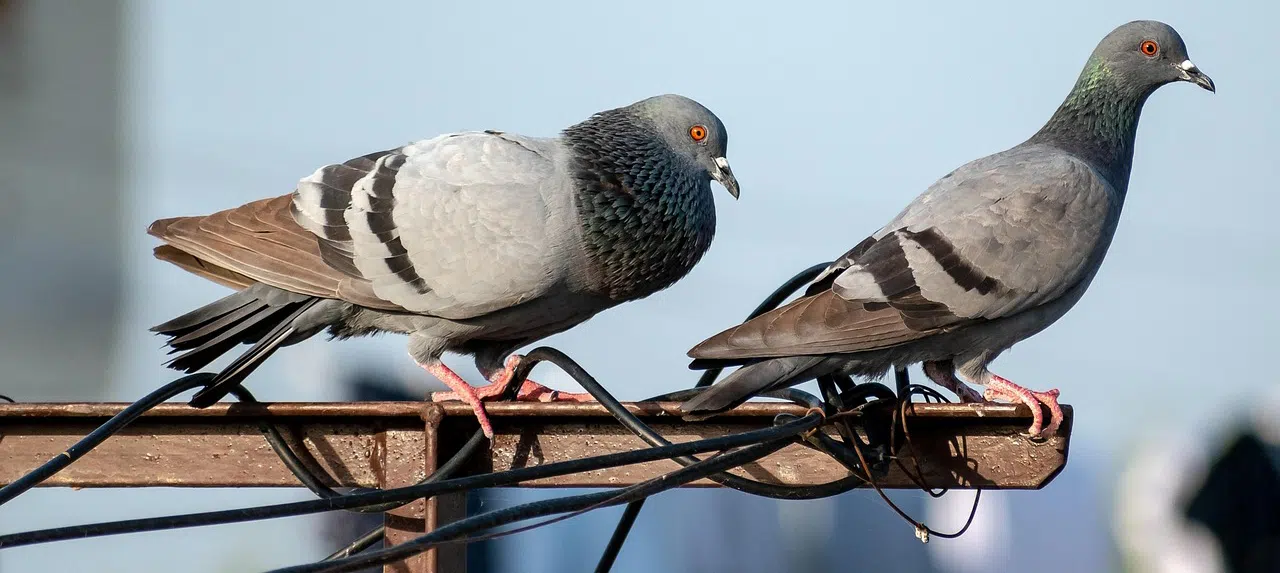
Feral pigeons (Columba livia) have become ubiquitous in virtually every urban space throughout the United States. While often seen as harmless, the presence of these birds in certain places, such as in chemical plants and refineries, can translate to a real safety and contamination risk.
The State of Florida presents unique challenges in the management of nuisance birds like pigeons, with problem birds remaining in the area year-round combined with the already heavy wear and tear of equipment and facilities in the state’s humid, stormy climate.
Chemical plants and refineries also require more consideration for contamination and hazard compliance than average industrial sites, making pigeon control at these locations particularly difficult. This is especially true for facilities seeking industrial pigeon control in Florida, where year-round bird pressure can make infestations persistent.
Why Chemical Plants Attract Pigeons
Pigeons prefer to nest on the high ledges of buildings, in piping, in warehouse interiors, and even occasionally in equipment. These birds are drawn to the warmth and relative safety these structures offer. Very few predators hunt pigeons in these highly industrialized zones, and covered ledges and open warehouses often act as shelter from Florida’s harsh weather. Additionally, pigeons enjoy access to the water from cooling systems and runoff zones.
These combined features make pigeon infestations at chemical plants and refineries an inevitability, which is why many facility managers seek effective ways to get rid of pigeons before they create larger safety and compliance concerns. The result of infestation is frequent pigeon nesting in chemical plant structures, particularly on elevated ledges, piping systems, and warehouse interiors.
Risks of Pigeon Infestation in Chemical Plants
Safety and Operational Risks
One of the chief concerns of pigeon infestations in chemical plants is the risk they pose to employee and operational safety. Pigeons constantly produce large amounts of guano, which can become a serious slip risk on catwalks, ladders, and other walkways throughout the plant. Pigeons are also notorious for choosing very poor locations for nests, the materials for which can clog and damage equipment. These nests are constructed of dry, flammable materials that pose a real fire hazard when placed near even the safest power sources.
Contamination and Compliance Risks
In addition to the safety risks posed, pigeon infestations also threaten the biosecurity of chemical operations. Pigeon droppings, dander, nesting materials, and other waste can contaminate chemical processing areas. Pigeon droppings are particularly acidic and contain uric acid, which can contaminate sensitive chemical processes. This contamination can also interfere with plant compliance and inspections.
Infrastructure Damage
Aside from the contamination and safety risk of pigeon infestations in chemical plants, the acidity of pigeon droppings is known to corrode paint, metal, stonework, and brickwork. Pigeon guano can damage critical plant infrastructure, especially if excessive or left over time.
Why Traditional Bird Control Methods Fail in Chemical Plants
Why DIY and Consumer Deterrents Are Not Suitable
While there are many options available for pigeon control on the market, chemical plants and refineries have specific limitations that make many of these methods infeasible. Some chemical sprays and gels that can be used to deter pigeons do temporarily work to interrupt perching and nesting behavior, but these are topical solutions that must be constantly re-applied, in addition to potentially posing a reactivity risk around sensitive chemical processing areas. Similarly, commercially available sound devices work in the short term, but birds adjust to the noise over time and are likely to return when they do—or when the device loses power or requires maintenance. Pigeons also swiftly adjust to visual deterrents like fake hawks and owls or automated light systems, and may even use them as perches or nesting sites.
Why Partial Solutions Increase Risk
Some commercially available solutions do work but pose a risk to plant safety and compliance if used incorrectly. For example, bird spikes and netting of lower quality may melt in contact with hot surfaces in the plant or even become caught in equipment. Plastic deterrents also run the risk of degrading over time and shedding plastic as contaminants. Improper installation and uninformed contractors can be a particularly costly mistake when paired with the more sensitive equipment found in the plant.
The Dos and Don’ts of Chemical Plant Pigeon Control
Don’t:
- Use standard pyrotechnics. These devices are a serious danger in chemical plants with flammable or explosive materials and can be a catastrophic fire risk with the slightest chemical leak.
- Use standard pressure washing to remove guano. Water runoff containing pigeon droppings can interfere with power sources in the plant, and the aerosolized guano may contaminate the product.
- Use plastic deterrents. They are highly prone to degradation and melting, which may ruin equipment or shed plastic as contaminants.
Do:
- Coordinate with Environmental Health and Safety. Ensure all bird control activities are cleared and permitted through the plant’s environmental safety regulations.
- Use safe equipment. Ensure any and all equipment, such as lasers, are in safe working order and meet site-specific safety regulations.
- Prioritize stainless steel. High-grade stainless steel survives the corrosive environment of a chemical plant far better than a material like plastic.
The First Step in Pigeon Control for Chemical Plants
Because of the sensitive work environment in chemical plants and refineries, pigeon control in these settings must be a multi-step process. Individual sites must be mapped to identify specific problem areas with birds and to classify work hazards found within. Bird control solutions that propose the use of stationary deterrents also need to be suitable for the heat and chemical conditions found on-site, which may vary from plant to plant. Similarly, it is vital that any and all bird control solutions are tailored to the work schedules of plant staff, so their work routine is disrupted as little as possible.
Pigeon Control Solutions Suitable for Chemical Plants
Falconry for Chemical Plant Pigeon Control
Falconry is a very widely utilized tool for long-term bird control. Falconry, the flight of trained birds of prey, uses the ecological concept of the “landscape of fear” to reduce the population of nuisance birds over time. The presence of a predator not only scares problem birds, but repeated exposures even encourage birds to stay away in the future.
Pigeons in particular are incredibly skittish around birds of prey, and year-round use of falconry as a deterrent discourages behaviors associated with pigeons settling down at a site, such as feeding and nesting. This practice can also help cover the most ground at larger sites but is even more effective in open-air settings where the raptor is plainly visible. While a licensed, professional falconer is required for this type of work, it requires no installation of equipment and is non-invasive and chemical-free.
Industrial-Grade Bird Netting for High-Risk Zones
High-quality, targeted netting is also a highly effective form of bird control when used in conjunction with falconry. These nets are placed over high-risk zones, such as loading bays, waste management areas, and structural beams where pigeons prefer to roost and nest, physically preventing the birds from partaking in these behaviors. Nets can also be used to shield operations from contamination in droppings, dander, and nest materials.
While netting can be effective, it must be used with some important considerations kept in mind. Nets must be made of non-flammable, stable material that does not melt at a high temperature or react with chemicals found at the plant. It is also vital that netting is placed very carefully to avoid snagging or snaring in plant equipment.
Ledge Protection and Structural Deterrent Systems
Ledge protection is used to deter pigeons from areas where they commonly prefer to nest and roost, such as catwalks, parapet walls, and utility ledges. Each structural pigeon deterrent should be selected based on the site's operating conditions and safety requirements. These systems are not only low-maintenance, but free from corrosion and resistant to Florida’s climate if made with proper materials and installed correctly. Structural deterrent systems are best used as a part of a larger, integrated bird control solution, but may help specific high-risk areas of the plant.
Integrated Pigeon Control Strategy for Chemical Plants
Because of the varied needs of chemical plants experiencing nuisance pigeon problems, prevention can often only be achieved by layering multiple methods on top of one another. A highly effective, integrated approach utilizes falconry to remove active, perching birds and to prevent them from returning, netting to block critical nesting and roosting zones, and ledge protection to deter perching on surfaces. This layered approach also allows deterrence measures to be highly adaptable to changes in weather, bird behavior, and specific site needs. With ongoing monitoring, specific areas of control can be adjusted accordingly.
Pigeon Nest Removal and Dropping Cleanup in Chemical Plants
While deterrence seeks to control the bird problem long-term, there may be some areas that need immediate addressing—pigeon guano buildup on machinery and structures within the plant that require removal, for example. All measures possible must be taken to ensure that pressure washing and other forms of dropping cleanup are safe in the specific parts of the plant, while meeting all of the site’s biohazard requirements. Staff members who participate in removing guano must also be equipped with proper PPE at all times and dispose of any removed waste properly. Guano cleanup and removal is a vital function of a plant with a serious bird infestation but will keep requiring staff and equipment resources in the future if not paired with deterrence measures.
Why Professional Pigeon Control Is a Must
Why Choose Hawkeye
Hawkeye Bird and Animal Control has over 35 years of experience with bird control in chemical plants, industrial zones, and other high-risk environments. Compliance with site safety and regulations is our top priority, and our bird control plans are tailored to the needs of each site. Hawkeye also specializes in humane, non-chemical solutions that comply with state and federal law with no hassle for business owners. Our team has extensive experience providing pigeon removal in Florida for chemical plants, refineries, and other industrial facilities.
When to Call Hawkeye
Reach out to Hawkeye when your site experiences any of the following:
- Active pigeon nesting
- Droppings near processing zones
- Audit or safety compliance concerns
- Recurring pigeon problems despite use of deterrents
Our team of professionals is ready to assist in tailoring an individual bird control plan to your site and ensure that pigeon problems are a thing of the past.