
Florida Bird Control & Abatement - Trusted Solutions incl. Falconry
Florida’s aviation environment is one of the busiest and most complex in North America. Florida airports spanning international hubs like Miami International Airport and Orlando International Airport to high-traffic executive facilities such as Palm Beach International Airport and Fort Lauderdale-Hollywood International Airport operate in a unique climate that supports year-round bird activity. About 50 million migratory birds flock to the state for the winter, with many more passing through on their way south. Among the most persistent and underestimated threats in these environments is the feral pigeon.

For aviation facility managers, fixed base operators (FBO) at airports, and airport authorities, professional pigeon control for airports is not simply a property maintenance issue—it is a critical aviation safety requirement.
Florida Aviation Environments: Why They Attract Pigeons
Florida’s climate creates the ideal pigeon habitat:
- Warm temperatures year-round
- Abundant food sources from urban surroundings
- Large structural roosting areas (hangars, terminals, jet bridges, parking garages)
- Minimal seasonal die-off compared to northern states
Airports and aviation facilities provide elevated ledges, beams, and protected cavities that mimic the cliff environments pigeons naturally prefer. This unique environment makes long-term pigeon control in Florida aviation facilities especially important for maintaining safe operations.
In Florida, where migration is less of a limiting factor, pigeon populations remain stable and often grow continuously if not professionally managed. Without professional pigeon control, populations can grow rapidly and become difficult for airport staff to manage.
Unlike migratory bird species, pigeons are non-migratory and highly site-faithful. Once established at an aviation facility, they will continue to roost, breed, and return daily—creating a long-term risk.
While they are part of the same family (Columbidae), the term "pigeons" typically refers to the larger, stockier species, while "doves" are smaller and more slender.
Common pigeon species found in Florida:
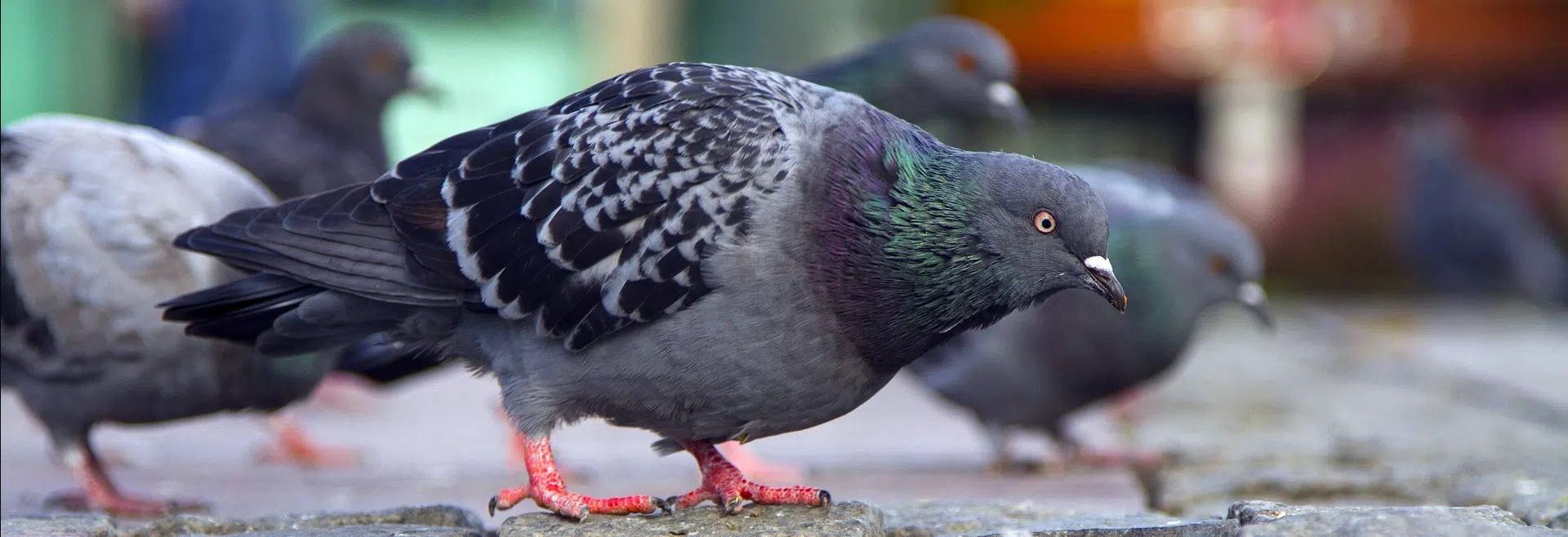
- Rock Pigeon (Feral Pigeon): This is the most common pigeon in Florida, often seen in urban areas, on windowsills or ledges, and gathering in city parks. They are also referred to as city pigeons. Rock pigeons are an introduced species, brought over from Europe initially as a food source and quickly becoming feral. These pigeons boast highly variable colors, ranging from classic blue-gray with black wing bars to all-white, "wedding release" varieties.
- White-Crowned Pigeon: This native, threatened species is found primarily in extreme South Florida and the Florida Keys. It is easily identified by its dark slate-gray body and a brilliant white "cap" on its head. The white-crowned pigeon is unique for nesting on remote mangrove islands and flying to the mainland to feed on tropical fruits, like poisonwood and figs.
Why Pigeons Pose a Serious Aviation Risk
While pigeons may seem smaller and less dramatic than large flocking birds, they still pose several aviation-specific hazards:
Bird Strike Risk
Pigeons frequently loaf on runways, taxiways, and terminal rooftops. When startled by aircraft movement, they flush unpredictably into active airspace. Even smaller birds can cause:
- Engine ingestion damage
- Windshield impact
- Airframe dents
- Distraction during takeoff and landing
At high speeds, even a single pigeon strike can result in costly downtime and inspection delays.
Hangar and Facility Contamination
Inside hangars and maintenance facilities, pigeons create:
- Corrosive droppings on aircraft surfaces
- Nesting material inside structural cavities
- Foreign object debris hazards
- Contamination of maintenance zones
Bird droppings are acidic and accelerate corrosion on aluminum and painted aircraft surfaces. In Florida’s humid, salt-influenced coastal air, corrosion risk is already elevated—pigeon activity compounds that threat.
Health and Regulatory Concerns
Pigeon infestations can introduce:
- Air quality contamination
- Histoplasmosis and psittacosis risk
- Slip hazards on walkways
- Structural degradation
Aviation facilities are held to strict operational and safety standards. Persistent pigeon roosting undermines compliance and creates reputational risk.
Why General Bird Abatement Is Not Enough for Pigeons
Effective aviation facility pigeon control requires techniques designed specifically for hangars, terminals, and other aviation structures.
Many airports implement general wildlife hazard management plans that focus on:
- Raptors and migratory birds
- Waterfowl
- Flocking blackbirds
However, pigeon removal in Florida aviation facilities requires a different strategy.
Pigeons Behave Differently Than Migratory Birds
Unlike transient species, pigeons:
- Breed year-round in Florida
- Nest inside structures
- Exhibit strong homing behavior (if scared off, they’ll always return “home”)
- Rapidly repopulate treated areas
Traditional bird dispersal techniques (noise cannons, occasional harassment, pyrotechnics) may temporarily scatter pigeons but will not eliminate structural nesting populations.
Why Specialized Pigeon Control Is Required
Effective pigeon control at Florida airports requires a multi-layered, aviation-specific approach:
1. Structural Exclusion
- Heavy-duty bird netting in hangars, maintenance bays, roof canopies and jet bridge undersides.
- Ledge modification
- Entry-point sealing
- Anti-roost systems and pigeon deterrents for airport terminals that are engineered for aviation infrastructure
- Shock Track, systems, bird spikes, and other aviation approved pigeon deterrents designed for airport infrastructure
This prevents nesting and long-term establishment.
2. Targeted Trapping Programs
Where populations are already established, humane live trapping programs reduce breeding stock and break site loyalty cycles. This is especially important for large hangars, maintenance facilities and any outside buildings where pigeons may nest, especially near the flight lines.
3. Falconry-Based Reinforcement
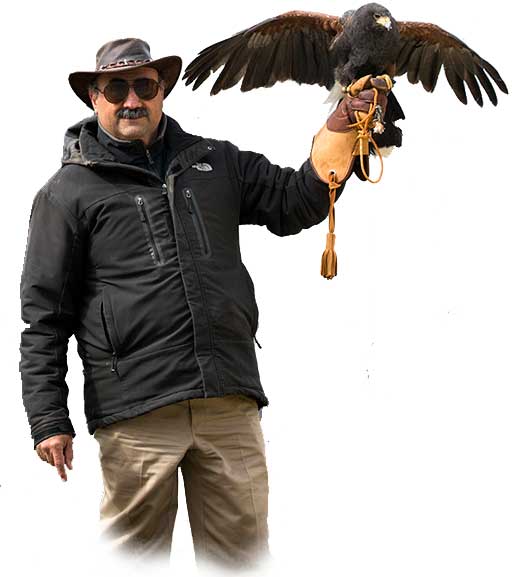
In aviation environments, properly managed falconry programs can create real predator pressure. Raptors alter pigeon behavior in ways that sound deterrents cannot. For a pigeon, “home” becomes a dangerous place to be. In Florida’s open-air airport landscapes, falconry can be a powerful complement to structural exclusion and trapping.
4. Ongoing Monitoring and Compliance
Florida airports operate under FAA wildlife hazard mitigation expectations. Pigeon control must integrate with:
- Wildlife hazard assessments
- Safety management systems (SMS)
- Environmental compliance considerations
This requires a specialist who understands both pigeon biology and aviation risk. These strategies often form part of broader airport wildlife management services designed to reduce bird-strike risks.
The Unique Challenge of Florida’s Coastal Airports
Airports in South Florida and along the Gulf Coast face additional complexity:
- Salt air accelerates corrosion from droppings.
- Hurricane-resistant construction creates sheltered ledges.
- Urban density increases food availability.
- Year-round breeding accelerates population growth.
Facilities in areas like West Palm Beach, Fort Lauderdale, Miami, and Tampa must treat pigeon removal as an ongoing aviation safety program—not a one-time cleanup.
Why Professional Pigeon Removal Protects Aircraft, Infrastructure, and Liability
Many aviation operators rely on specialized bird control services for airports to manage persistent species like pigeons that thrive in structural environments.
Aviation pigeon control is not just about removing birds—it is about:
- Reducing bird strike exposure
- Protecting aircraft assets
- Maintaining regulatory compliance
- Preventing corrosion and structural damage
- Protecting passenger perception
Long-term pigeon abatement programs help airports maintain safer flight operations and cleaner aviation facilities. Improper or incomplete removal can actually worsen infestations by dispersing birds into adjacent structures within the same facility.
Choosing an Aviation-Specialized Pigeon Control Provider in Florida
Specialized airport pigeon removal services ensure that bird management strategies align with aviation safety regulations and operational requirements.
When selecting a pigeon removal service for Florida airports and aviation facilities, choose Hawkeye Bird and Animal Control.
Hawkeye:
- Understands aviation safety protocols
- Coordinates with airport operations
- Uses exclusion-based solutions
- Avoids ineffective short-term dispersal-only tactics
- Can integrate falconry where appropriate
- Is compliant with FAA protocols
Pigeon removal in Florida airports is a specialized discipline that requires knowledge of avian behavior, aviation infrastructure, and regulatory sensitivity.
Florida’s aviation industry is critical to tourism, commerce, and global connectivity. Pigeons may appear small, but their impact on aircraft safety, maintenance integrity, and airport operations is significant.
Specialized pigeon control—not general bird abatement—is the only long-term solution for aviation facilities in Florida’s demanding environment.
For airport authorities, FBO operators, and aviation property managers, proactive pigeon removal is an investment in safety, compliance, and operational reliability. Airport managers looking to get rid of pigeons safely and effectively should work with experienced bird aviation control specialists.
Contact Hawkeye Bird & Animal Control
Hawkeye is your go-to company for bird abatement and pigeon trapping. We have over 3 decades of experience in falconry bird control and pigeon trapping. Hawkeye is part of the Bird Strike Committee in North America and is very familiar with civilian airports. We also have knowledge of the BASH program. Contact us today!
Florida’s warm climate, extensive coastline, abundant waterways, and year-round tourism make it one of the most bird-dense regions in North America. While birds are a natural part of Florida’s ecosystem, they create serious challenges for golf courses, resorts, tennis courts, yacht clubs, restaurant patios, oceanfront parks, and outdoor recreation facilities. Nuisance birds such as gulls, pigeons, grackles, ibis, cormorants, crows and blackbirds can quickly overwhelm outdoor spaces, creating health and safety risks, property damage, and negative guest experiences.

A Proven Solution by Hawkeye Bird Control
Hawkeye Bird and Animal Control provides professional falconry-based bird abatement services in most of Florida, offering a highly effective, environmentally responsible, and publicly accepted solution to bird conflicts. By using trained birds of prey handled by licensed professional falconers, Hawkeye restores a natural predator presence that birds instinctively recognize and avoid—without harming wildlife or disrupting guests. Nuisance birds cannot adapt to the presence of a predator creating long term avoidance of an area.
Bird Problems Unique to Florida Properties
Florida properties face bird pressure unlike almost anywhere else in North America. Warm temperatures allow many species to remain active year-round, while migratory birds dramatically increase populations during fall, winter, and spring. Coastal and inland waters attract gulls, pelicans, cormorants, and ibis, while manicured turf and outdoor dining areas draw geese, pigeons, grackles, and starlings.
Common bird-related issues in Florida include:
- Heavy accumulation of droppings on walkways, patios, docks, and pool decks
- Increased risk of slip-and-fall incidents
- Food contamination at outdoor dining areas
- Aggressive bird behavior during nesting and breeding seasons
- Damage to turf, landscaping, boats, and structures
- Negative guest reviews and complaints that can affect brand reputation and repeat visits.
Many traditional bird deterrents fail in Florida’s open, coastal, and resort environments. Birds quickly habituate to noise devices, visual scare tools, and passive deterrents. Falconry remains one of the few methods birds cannot adapt to, making it particularly effective in Florida conditions.
How Falconry Bird Abatement Works
Falconry bird abatement relies on the biological reality that nuisance birds will not and cannot tolerate consistent predator pressure. Hawkeye’s licensed falconers fly trained birds of prey—such as Harris’s hawks—through targeted areas to disrupt feeding, roosting, and nesting behaviors.
Unlike static deterrents, falconry is dynamic and unpredictable. Birds perceive the area as unsafe and relocate elsewhere. Importantly, falconry is non-lethal, humane, and compliant with Florida Fish and Wildlife Conservation Commission (FWC) regulations when performed by properly licensed professionals like Hawkeye.
The result is long-term behavioral change of nuisance birds rather than short-term displacement.
Falconry at Florida Golf Courses
Florida golf courses are especially vulnerable to bird problems due to expansive turf, water hazards, and limited human presence during early mornings and off-hours. Geese, ibis, gulls, crows and blackbirds can severely damage greens and fairways while creating sanitation and safety concerns.
Hawkeye’s falconry programs are ideal for golf courses because they:
- Cover large open areas efficiently
- Protect greens, fairways, tees, and water features
- Reduce chemical and cleanup costs
- Preserve the visual appeal of the course
- Operate discreetly around tee times and tournaments
Regular falconry patrols train birds to avoid the property entirely, reducing long-term pressure and maintenance issues.
Resorts and Hotels
Florida resorts depend on pristine outdoor spaces—pools, beaches, gardens, walkways, and patios—to deliver a luxury guest experience. Bird droppings on lounge chairs, pool decks, and railings are among the most common and costly complaints and pose a health and safety hazard.
Hawkeye’s falconry services are particularly well suited to resorts because they:
- Maintain a quiet, non-disruptive presence
- Enhance environmental responsibility and sustainability messaging
- Are safe for guests and staff
- Can be scaled seasonally during peak tourism months
- Improve guest satisfaction and online reviews
- Enhances guest interest and education rather than causing complaints
Many Florida resorts view falconry not just as bird control, but as a premium, eco-conscious amenity that aligns with their brand. Guests appreciate the environmentally responsible wildlife management.
Tennis Courts and Outdoor Sports Facilities
Bird droppings on tennis courts, pickleball courts, and sports surfaces create slip hazards and lead to frequent closures and cleaning costs. Birds often roost on light poles, fencing, and overhead structures.
Falconry is highly effective in these environments because it:
- Clears birds from elevated perching areas
- Keeps playing surfaces clean and safe
- Reduces downtime and maintenance expenses
- Avoids permanent hardware that affects visibility
Hawkeye designs falconry programs that protect entire facilities rather than isolated problem spots.
Yacht Clubs, Marinas, and Waterfront Properties
Florida’s yacht clubs and marinas face constant pressure from gulls, pelicans, cormorants, and pigeons. Boats, docks, pilings, and clubhouses quickly become roosting and loafing sites, leading to corrosion, sanitation issues, and member complaints.
Hawkeye’s falconry programs are extremely effective in waterfront environments because:
- Birds of prey naturally patrol shorelines and open water
- Gulls and pelicans respond strongly to aerial predators
- Boats and docks remain cleaner and safer
- Services comply with coastal and wildlife regulations
Regular falconry patrols significantly reduce bird presence without interfering with marina operations.
Restaurant Patios and Outdoor Dining Areas
Outdoor dining is a major feature of Florida’s hospitality industry—and one of the most challenging environments for bird control. Gulls and pigeons quickly learn to associate patios with food, often becoming aggressive toward diners. Nuisance birds have been know to take food from diners plates and even leave their feces behind.
Falconry provides a discreet and highly effective solution by:
- Preventing birds from establishing feeding patterns
- Eliminating the need for loud or unsightly deterrents
- Supporting health-department compliance
- Preserving a relaxed, upscale dining atmosphere
By addressing bird behavior early, Hawkeye helps restaurants avoid chronic problems before they escalate.
Oceanfront Parks and Public Recreation Areas
Florida’s oceanfront parks, boardwalks, and public recreation spaces experience intense bird pressure due to food availability, open space, and minimal predators. Gulls and shorebirds can dominate these areas, leading to sanitation issues and aggressive behavior toward the public.
Hawkeye works with municipalities, park authorities, and private operators to implement falconry programs that:
- Reduce bird aggression and nesting pressure
- Improve cleanliness and public safety
- Support wildlife coexistence rather than eradication
- Align with public expectations and conservation goals
Falconry is increasingly recognized as one of the most effective bird-management tools for Florida’s public spaces.
Why Choose Hawkeye Bird and Animal Control
Hawkeye Bird and Animal Control brings extensive experience in falconry-based bird abatement across complex, high-visibility environments. Hawkeye’s programs are:
- Fully compliant with Florida wildlife regulations
- Conducted by licensed, professional falconers
- Customized to each property and target species
- Environmentally responsible and publicly accepted
- Proven effective in Florida’s unique conditions
- Hawkeye has all necessary State and Federal permits.
Rather than relying on one-size-fits-all deterrents, Hawkeye integrates falconry into a comprehensive wildlife-management strategy tailored to each site.
Call Hawkeye Bird & Animal Control LLC.
Florida’s outdoor recreational and hospitality properties require bird-control solutions that are effective, ethical, and compatible with public expectations. Falconry-based bird abatement meets these requirements better than any traditional deterrent. Many people appreciate seeing a Harris Hawk up close doing what nature intended - hunting.
At golf courses, resorts, tennis courts, yacht clubs, restaurant patios, oceanfront parks, and outdoor recreation areas, Hawkeye Bird Control delivers long-term results by restoring a natural balance that birds instinctively respect. Falconry is not just bird control—it is a professional, sustainable investment in safety, cleanliness, and guest satisfaction.
Grackles are becoming increasingly more of an issue in Florida's marinas and shipyards. Far from just being a nuisance, not addressing grackle infestations can lead to serious problems for boat owners, staff, and visitors.

Grackles are omnivorous and will readily seek meals from a plethora of sources. A large component of their diet consists of arthropods, including aquatic species like farmed and wild-caught shellfish that are brought to docks. Grackles will also naturally pick small fish from the surface or shores of water bodies for their meals. The opportunity to more easily obtain food from human-occupied marinas creates incentive for these birds to dwell closer, creating a vast array of health, safety, and profit concerns.
The most prominent grackle species in Florida is the boat-tailed grackle, Quiscalus major, which is known to be complexly social and at times aggressive in its pursuit of food and territory. As a primarily coastal species, these grackles are especially drawn to these locations of easily obtained seafood. They form large groups of individuals, and, if a human or animal happens to wander too close to the nesting females, they may be targeted by the local protective male.
Well-known visual and acoustic methods of bird deterrence leave much to be desired when a population of grackles has set up shop near what they consider a prolific food source. The system used by Hawkeye Bird and Animal Control is both integrated and humane, playing into the natural instincts of grackles as songbirds to mitigate their damage output and redirect them from human areas. The combination of lasers, pyrotechnics, and falconry techniques is a multisensory system that is effective in grackle control.
Why Are Grackles Drawn to Marinas?
Florida, naturally, is home to many piscivore species (i.e., animals that eat fish). Grackles may not be the only kind of bird you find roaming the docks in search of bycatch or undesirable fish; herons, egrets, cormorants, and anhingas are perhaps more commonly associated with the gulf and Atlantic fisheries. However, these birds are not known for the same antagonism that has made the boat-tailed grackle notorious. Additionally, they do not come in the same droves that can include over one hundred birds.
As previously stated, grackles are known for their wide dietary profile. Though foraging is not necessarily a tall order when there are so many foods to choose from, there will always be ebbs and flows in food availability. In such cases where there is less food available, animals may resort to methods of getting their meals that are less energetically taxing so that they are still able to reap the benefits of whatever they find. This trend is what leads to the grackle’s less-than-desirable relationship with humans—these birds realize they could get a lot more food without doing any of the work by simply taking what has been procured by someone else. In this case, it means plucking flopping fish or crabs from a captain’s bow…or perhaps the French fries from a patron of a restaurant.

Regardless of the food they consider worth the crime, boat-tailed grackles will build their nests nearby to keep the convenience close. Though these birds are known to nest in tall grasses, shrubs, and reeds, they are certainly not picky, so they will settle in boat canopies and other human structures. This habit is compounded by their eventual realization that many predators will avoid places of heavy foot traffic. Instead of forming pairs, a single male will take on the role of defending a group of nesting females from “competitors,” be they other males or the newest boat owners at the marina.
Generally, grackle activity will boom in the late summer as individuals choose their warmer southern nesting sites. The birds will continue to cause issues as they nest, especially as males begin to retrieve food for the stationary brooding females. When the nestlings hatch in the spring, both parents will bring them food until they fledge…and a plague of new grackles enters the arena.
Impact of Grackle Infestations
The ramifications of bird infestation make the moniker “a plague of grackles” much more understandable. Some birds can poop up to 48 times in one day, and grackles are no exception. Birds with nestlings will even carry their poop away from the nest! Beyond the aesthetics, this constant flow of waste is detrimental in many ways to us humans.
Bird poop is actually a combination of waste from both the kidneys and the digestive tract; the two forms of waste are mixed after their individual production and expelled from the body at the same time. The white portion known for substantial staining is the urinary waste. While humans and most mammals will expel kidney waste in the form of urea, birds do so in the form of uric acid, which allows them to decrease waste toxicity at the cost of more energy.
Your level of worry should spike at the sight of the word “acid.” This corrosive chemical eats away at paint, wood, and metal alike, causing degradation and rusting. Cleaning is either immediate and laborious, or delayed and expensive (and, honestly, still laborious). Everything is at risk: canvas coverings, wiring, fiberglass coating, aluminum—even complex machinery, like motor and radar systems. The last thing anyone wants is for the boat-lift cable to slip mid-use.
Though they’re perhaps not a bona fide plague-spreader, there are still human health considerations when boat-tailed grackles are present. There have been recorded cases of avian influenza in grackle species, a virus that is spread not only through fecal matter but also other fluids and even feather proteins. It is important to note that, though the risk remains low to humans, having many birds congregating would increase disease flow among songbirds and contribute to decreasing population trends.
There is no returning from the metaphorical stain on a shipyard’s reputation that is left by the actual stains of copious bird poop. Incidental damage, odors, and the occasional slip-and-fall accident can tank public perception and the future sales of the marina.
All of these negative effects underline the need for using professional grackle removal services.
Common Grackle Deterrents That Don’t Work for Marinas
Mainstream bird deterrents used in abatement generally fall into the categories of sight or sound. There are plenty of things people have tried that will only work for short amounts of time, if at all, when implemented in cases such as marina-inclined grackles. Grackles are incredibly intelligent, quickly finding ways to overcome human intervention, notwithstanding the environmental considerations.
Visual deterrents are installed in the hopes that birds will be scared enough to avoid areas where they have been put. You’ve likely seen the fake owls lining the shelves of the garden section at your local hardware store or perhaps “perched” at the corner of someone’s roof. Wind kites shaped like birds of prey are also available, fluttering in the wind in a false flight. These, like scare-eye balloons and flash tape, are meant to convince nuisance birds that a dangerous predator is in the area.
Acoustic deterrents follow the same basic principle but use sound instead of visuals to induce fear. Some noisemakers play back the sounds of predators, whereas others replicate songbird alarm calls. Ultrasonic devices play irritating noise outside the range of human hearing. Cannons and “bangers” have an increased range and can be combined with the aforementioned techniques to make a large area less attractive.
These are not foolproof methods. Visual deterrents only work in small surrounding areas, as grackles will simply choose another part of the marina to terrorize. This is also true of typical noisemakers; cannons do theoretically overcome this problem, but sound dissipates over distance and is affected by water conditions. Certain areas also have noise regulation laws.
All equipment is also at risk of expedited degradation due to the increased salinity of the air in marine environments. Breakdown of plastics, including paints and coatings, introduces microplastic pollution to the water and nearby soils.
The biggest drawback to using a single style of bird abatement is that grackles quickly understand that, though they are scared, they are not being chased. The “owl” is not blinking, nor are its feathers fluttering in the wind. There is no crow standing where that call is coming from. Any recognition of a lack of any real danger will set bird removal back or halt it altogether.
Hawkeye’s Proven Method for Grackle Control in Marinas and Shipyards
So, what is the best, most effective way to deter grackles from boats and waterfront areas?
Hawkeye’s signature approach to nuisance bird control employs raptors trained in the art of falconry. Though the selection of the species and even individual profile of the bird for your property depends on the matter at hand, the goal of falconry abatement remains constant: finding the advantages offered by natural interspecies interactions.
The trained raptor will follow the licensed falconer’s direction. Commands given through body language and whistle cues motivate the bird to follow closely and keep their trainer at a comfortable distance, allowing the falconer to explore the property with their partner in tow. Even though this humane method does not typically result in the death of any wild birds, moving the raptor towards said wild birds will still evoke their prey response and cause them to flee. The raptor is constantly observed both on the job and at home for optimal health and behavior.
However, the natural inclinations of the falconry bird can pose problems in certain weather conditions or crowded air spaces. Additionally, the implementation of falconry requires a recurring cost to truly be effective, as the wild birds must associate the raptor as a permanent predator. This is where two other methods of bird control come into play.
Lasers are an effective visual agitator for grackles, especially when continuously pointed where they attempt to land. This also gives the sensation of predator-prey chase, especially in low-light. However, due to the sensitive nature of nautical sensors and human eyes, this strategy must be entrusted to a trained operator only.
Loud acoustics like screamers function better as an abatement strategy when used in conjunction with visual harassment, because the final effect is more “predator-esque,” quickly dispersing large flocks of roosted birds. Noise ordinances and associated permits are the largest problems with acoustic implementation.
A post-abatement option to consider is the installation of netting once roosting birds are no longer actively nesting. This, with maintenance and observation, can prevent future grackle plagues from settling in.
Hawkeye’s Integrated Grackle Management Approach
Hawkeye uses the above methods strategically in customized plans based on observations made at your facility. The size of the property, risk factors for each deterrent, and overall goals are all considered to create a schedule and timeline for bird removal.
First, we disperse flocks and roosts with targeted abatement. Accompanied by their handler, a trained raptor patrols the area, causing grackles to congregate in numbers for safety before fleeing at the sight of the incoming predator. We target high-rise architecture with lasers and pyrotechnic acoustics. Even seagrape plants can be monitored and made unattractive simply by grabbing a branch and giving it a good shake! This is best done before any nests are constructed, so males do not attract their harems to the area.
Once the grackles are no longer an egregious problem, the area is cleaned. With permittance, the beginnings of any nests are cleared from the area. Feces and urates are no match for some elbow grease. Permanent barriers like netting and spikes can be installed at the behest of the property owner. If opting for this, understand that this kind of barrier will need to be maintained and monitored by the installer. It is also essential to have the occasional check-in by your raptor, laser, or pyro specialist to ensure long-term effectiveness. If you catch wind of any grackle activity post-job, remind them who’s in charge before they think it’s them!
With Hawkeye, all work is done by trained professionals with the licensing required for legal falconry and abatement procedures. Attempts by the uninformed to get rid of these nuisance birds are no match for the complexities of grackles’ natural behavior.
Advantages of Professional Grackle Control at Marinas
The key to any nuisance animal management plan is consistency, just as is true for any domestic animal training or conditioning. Constant input from multiple directions will remove incentive for grackles to colonize the area. Hawkeye’s methods are humane and environmentally friendly, and the effective removal will reduce the amount of cleaning and maintenance needed by the property owner to make up for the damage done by grackles. Plus, fewer birds means fewer health risks for people using the marina and surrounding facilities.
FAQs: Grackle Control for Marinas and Shipyards
Q: Are laser deterrents safe to use around boats and water?
A: In most cases, yes! Because a professional operator would be trained and familiar with the particular area, the operation would be safe and avoid sensors that may be damaged. An expert will also be aware of the risks posed by using lasers around aircraft, especially knowing that laser use is generally most effective with a solid backdrop, anyway, like a building or tree. We do not recommend DIY laser use.
Q: Are boat-tailed grackles (the coastal species) protected by law in Florida?
A: Because they are an endemic species, yes. However, the drawbacks of grackle colonization in urban areas have led to the circumstantial legalization of grackle “take” (i.e., disturbing/harassing, trapping, hunting, catching, shooting, killing, etc.) under standing depredation order. A professional bird or animal control company will obtain proper permitting before starting any job to allow for the legal removal of grackles, implementation of falconry abatement, and usage of noise and laser methods.
Q: Will using distress calls or recordings scare grackles away from my marina?
A: Not for long. Over time, grackles recognize that the distress calls they hear are not accompanied by actual distressed birds or predators that would warrant the sound.
Q: How does the initial cleanup process handle the biohazard risk from guano?
A: Removal of grackle feces eliminates the main sink of pathogens like avian flu, trichomonas spp., and coccidia. Additionally, getting rid of nests ensures that no chicks will be present, so no adult birds will be transporting their fecal sacs away from the nest into human foot traffic. Urates are, theoretically, not the main disease carrier—they simply accompany the feces and cause staining.
Q: How often are pyrotechnic deterrents used?
A: In most cases, 5-20 shots are necessary per visit. For large areas, daily visits are needed.
Q: Do I need a special permit to use a laser device for bird control on my property?
A: Generally speaking, you do not need a permit for laser deployment on your own property. This changes when you are located near aviation or national security installations. To be safe, check and confirm with your municipality.
Seeking marina pest bird management or shipyard bird control?
Hawkeye Bird and Animal Control services multiple areas of the State of Florida, including Tampa, Clearwater, Fort Myers, Naples, Miami, Fort Lauderdale, Jacksonville, and Orlando. Contact Hawkeye today for a customized grackle control plan for your marina or shipyard!

- Grackles are often considered pest birds due to their loud vocalizations, aggressiveness, large congregating groups and the mess they leave behind with their droppings.
- Grackles are frequently a nuisance at restaurant patios and resorts - they steal food from peoples' dinner plates and leave their droppings on people and their tables.
- Grackles are known to raid farm crops, particularly corn and other grains.
- Flocks of grackles are called a plague.
- Grackles are quite intelligent and have been seen using tools to crack open hard nuts to get the seed inside, much like crows do.
- Grackles can imitate sounds, including human speech and mechanical noises.
- They play a beneficial role in the ecosystem as grackles help control the insect populations and are a part of the food chain.